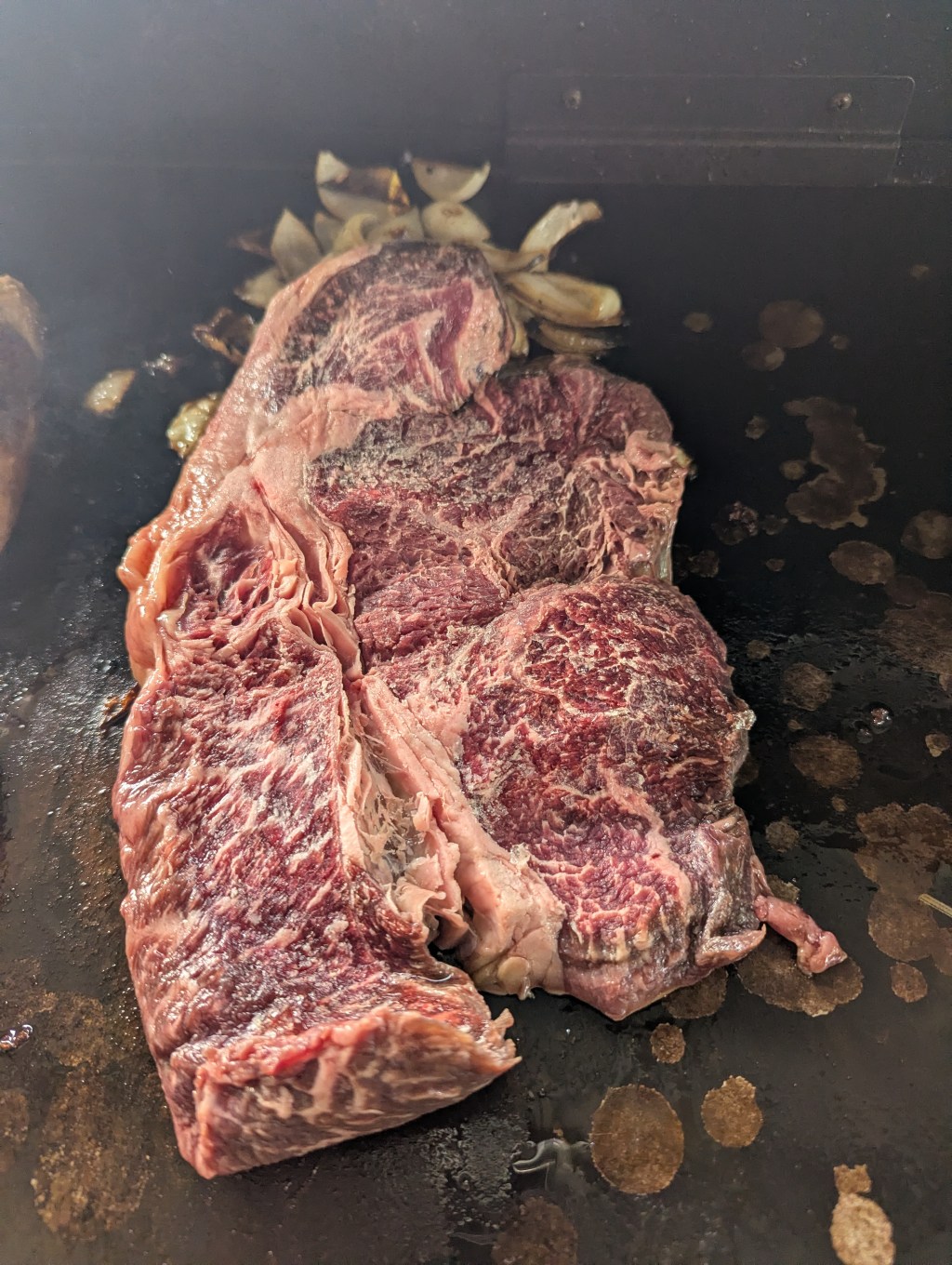
Raising Wagyu cattle for beef consumption requires more attention to detail than your standard British breeds. I discovered this recently while growing out Wagyu steers on a Highlands farm.
Wagyu- what is it? That really expensive Japanese steak on the restaurant menu that offers an elevated beef eating experience. But why is this?
What is Wagyu?
Wagyu originated centuries ago in Japan, predominately used as a draft animal. They were not great as a milk or meat yielding animal, but their genetics produced finely marbled meat. This is also called intramuscular fat.
Japan opened up to global trade in the late 1800s. This allowed international breeders to selectively breed. They aimed to improve carcass quality and flavor. Countries like America and Australia rapidly expanded their Wagyu programs in the 1990s, and today produce large branded beef programs. Australia is increasingly using Wagyu to cross with Brahman cows on large stations. This is done mainly to improve the fertility of the cows. It also improves their meat quality.
Providing intramuscular fat (marbling) produces a steak that is tender, juicy, flavorsome, and has superior texture. This is why Wagyu beef is sought after.
What is the catch? Wagyu take so long to grow and feed!
Wagyu naturally grow at a slower rate than other cattle breeds. If you grow them out rapidly, they will not produce the characteristic marbling. This marbling is what they are famous for. It was a trap I slightly fell in to.
High quality marbling forms between 18-30+ months, so cattle must stay on good feed to fully express it. High marbling also requires a grain rich diet, increased in stages. Wagyu take longer to produce because their elite marbling only develops slowly and steadily.
My experience
Having just processed my first Wagyu steer I feel I almost got it right. The end product was a very good quality meat carcass, with very good marbling, not A5 grade, but pretty good.
I went wrong by leaving the animal on a growing ration too long, before switching to a fattening ration. This led to him missing out on some of the potential high grade marbling through the meat. He lacked this marbling as he was growing and developing. The carcass ended up with a lot of surplus cover fat. This meant the steer was packing on the fat around the muscle and not in it. I missed the boat slightly. It also demonstrated that I chased the marbling longer than I should have, creating huge cuts of meat! Great for a person like me that can put a big steak away, but not very practical for most situations.
This steer was fed for 3 years on grain. He ended up 800kgs, with a 500kg carcass.
Conclusions. If you are going to produce and feed a Wagyu steer, this is what I recommend. Make sure you use an animal with decent genetics. Use a fattening ration early on and gradually increase it. If you are new to grain or ration feeding-introduce slowly! Keep the Wagyu in a small paddock, to limit energy use from walking too far. Weigh the animal regularly to monitor daily gain, and adjust your ration if necessary. Make sure water provided is clean. Work with your butcher or stock agent to track the animal’s progress. This will help you get the best outcome for eating or selling. Develop a safe ration with a feed provider. Thanks to Knowles Stockfeeds Moss Vale for supplying my ration.
If you are wondering, the meat tasted amazing! Very tender, juicy and had that buttery, fatty flavor.
Good luck! (Ganbatte)!
 Southern Highlands Farm Life
Leave a comment