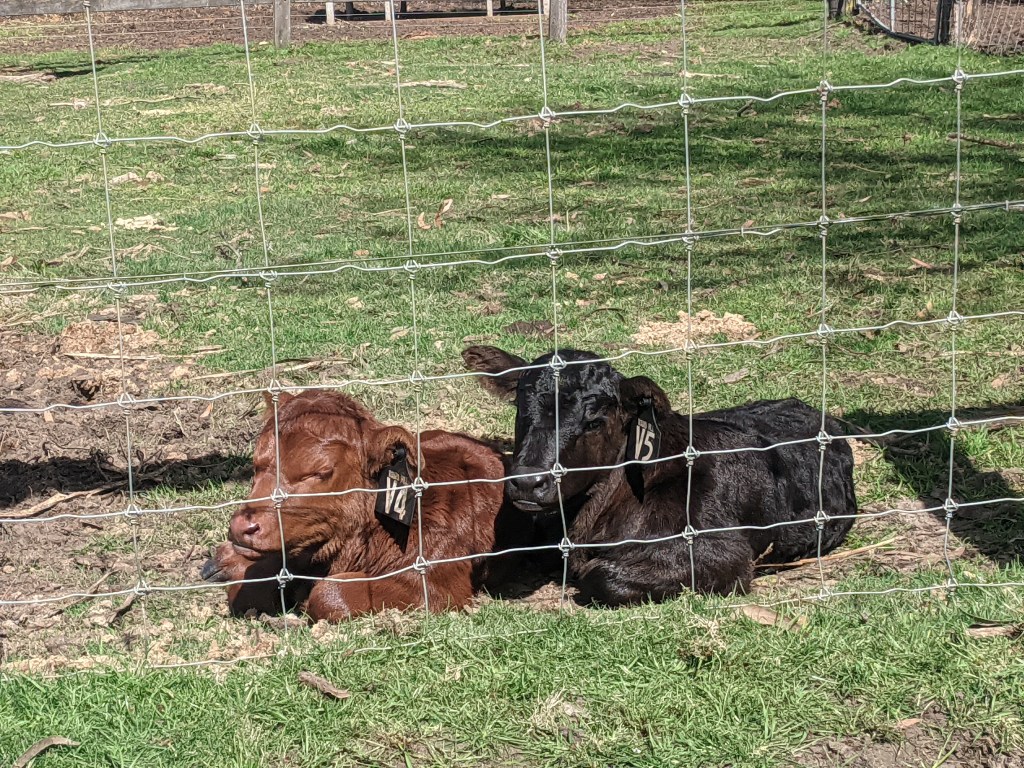
One of the most common dramas with calving cows can be twin calves.
Having wrapped up our calving for spring this year I contemplated my last two calving seasons. A problem over the last two seasons was twins. This is something to watch if you are setting up a breeding cow herd or are new to calving cows
It is not always possible to tell if twins are present by looking at a cow. Some cows swell up a lot when pregnant, while others do not. A trained eye can predict twins. If you are a hobby farmer or developing your herd, spotting a bulging cow does not necessarily mean twins.
One complication I had this season involved a twin calf. I observed the mother give birth-check. The calf was alive and breathing-check. The calf got up and had a drink- check. Job done-wrong. I left the pair to bond and went and did other tasks. I usually come back to tag the calf when it has had a drink, is tired and full of milk. I came back to do that task when, -problem. A twin calf was coming out backwards and was stuck. I rushed to the cows aid. Luckily I got the calf out and the mum was okay. It was a reminder however, that any of these mums could have a twin. Don’t assume that once one calf has been born, that cow’s job is over.
There are two other scenarios I would like to make new cattle farmers aware of. One is fairly common, one not so common.
The other problem I had this year, and most years is calf rejection with twins. I had a cow birth twins this year, but she didn’t want anything to do with the second calf. What should you do in this situation?
I usually get the mum into the crush. Give her some hay to keep her quite. Open up the side of the crush and force the orphan calf onto her udder for a drink. If you can make this work, it will save you a lot of time down the track. You will avoid feeding the calf by bottle, which is your next option if the cow will not accept the calf. Repeat this process. You will have to keep doing it for a day or two until she accepts the calf. Lock them in a holding yard of some description so they are close together. Keep in mind you will need to give the calf colostrum if you think it hasn’t received any. This is important and should be done early.
If this method doesn’t work, then you are up for bottle feeding the calf. There is a lot of info online on how to do this.
The other scenario that I want to raise is rare, but does happen. I had a cow give birth, the calf was healthy and drinking, I tagged it and updated my records. Did a check that night, and all okay. Same next morning. All good. Lunchtime I do a check, and there is a random un-tagged calf running around the paddock. I checked the mothers, no new cow had given birth. Strange-who owned this calf? I notice fresh afterbirth on the cow from the previous day. I triple-checked the cows that had not calved yet. I confirmed that this calf was from the cow from the day before. It was a twin and arrived the following day! Rare, but it does happen-so be vigilant!
I tried to match them back up but the mother wanted no part in it!
An extra point- if you have twins that are one male and one female, you will have a freemartin female. Look this up. The freemartin heifer will usually not be fertile.
Key takeaways:
Assume every cow potentially has a twin. Spend a little extra time observing a recent calving cow.
Get colostrum into a twin yourself, if the cow is rejecting it. You can get this fresh from a dairy farmer or from your local produce shop in a powder form. Have some on hand if you are calving.
Always call your vet if you are not confidant in a calving situation.
 Southern Highlands Farm Life
Leave a comment