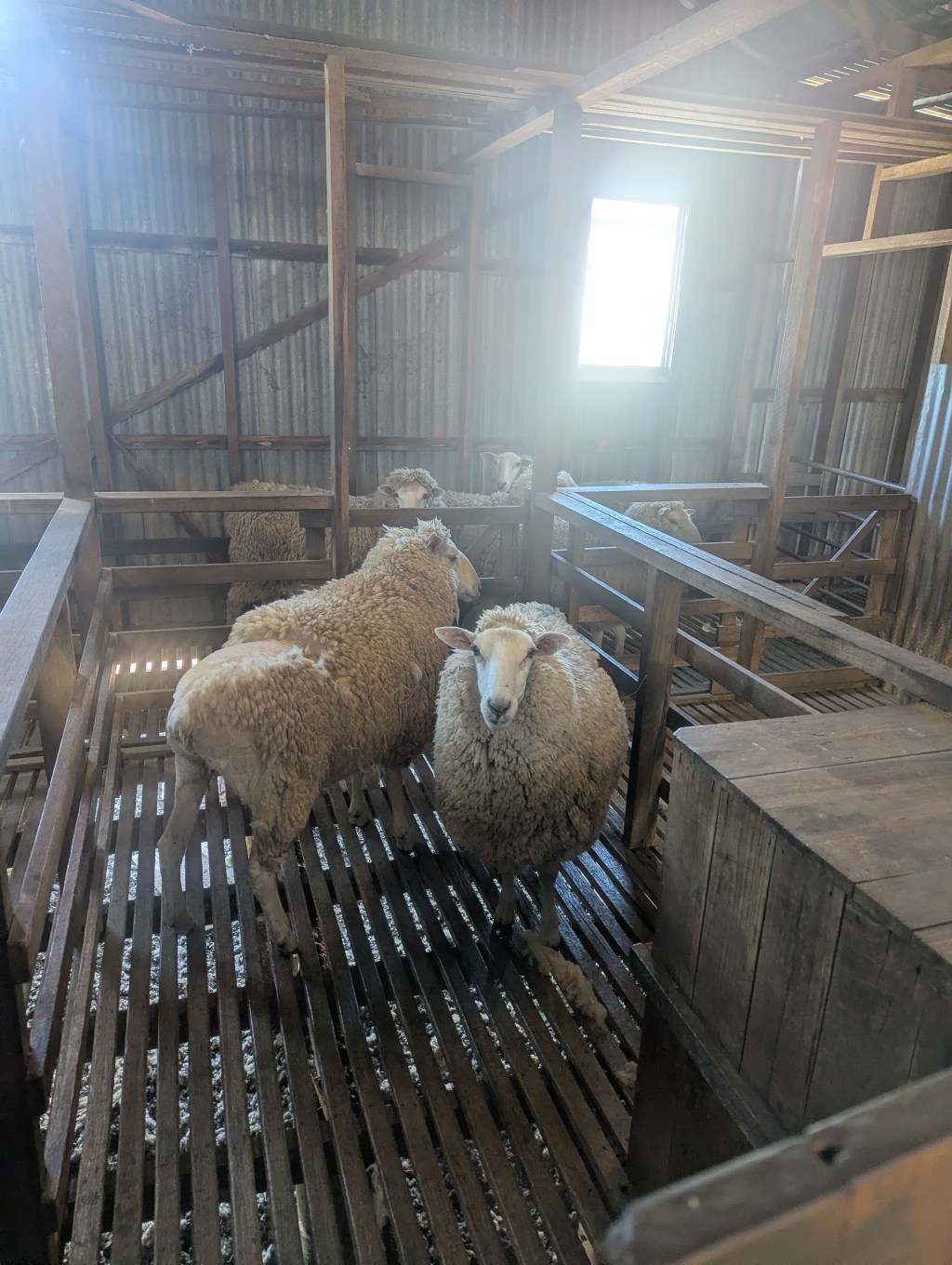
I had always had an interest in shearing, and this week I ticked it off my bucket list.
Some of my fondest childhood memories are mucking around in my Granddad’s shearing shed. Opening the wooden gates and playing in the chutes. Curios about how the shearing stand worked. The smell of lanolin and the history, mixed with the calm and quiet of the shed was intriguing.
I always gravitated more towards the cattle on the farm and still do to this day, but the shearing shed always fascinated me. I loved the hard work and the history of the wool and sheep industry. It built this great country into what it is today. I loved looking at paintings like Tom Robert’s ‘Shearing the rams’. I also enjoyed reading about the old shearing sheds in Henry Lawson’s writings.
As I child I would feed the orphan lambs a bottle in the kitchen of the house. I remember my grandmother getting up a all hours to fuss over these little lambs. She loved them and even knitted them jumpers. She would gather the wool from their sheep, spin it on the spinning wheel, and knit jumpers and beanies for our family. My grandfather would recount the old ways of shearing sheds, and show us movies like ‘Sunday too far Away’.
While I hadn’t dealt with sheep for a long time, and never pursued a career in wool, I decided it was time to give it a go, before I am too old to do so. I enrolled in a course to experience the hard slog that is shearing.
As I walked into the shed it instantly brought back those great memories. Wooden floorboards, corrugated iron sheets lining everything, and a light breeze coming up the shoots and through the floorboards.
We started the course with a retired shearer. We learned about the technicalities of the comb and cutter. We also learned about setting the hand piece up correctly. We learned about grinding and setting up your equipment to run without a problem . Once you drag a live sheep into the shed, you don’t have time to fluff about with your gear!
Time for action. We ran the sheep into their holding pens, and it was time to start. You have to be strong and deliberate as you go in and catch them. It is similar to dealing with all livestock. You can’t be half-hearted.
Through each different stage of the shearing process we dragged a sheep out and did a dry run. After a demo from the trainer, it was time to shear.
Shearing is a very difficult process. I see why people chase the skill for years to try and perfect it. It is similar to competitive wood chopping- a mixture of physical demands, and technical precision. The whole time you are wrestling a sheep that wants to get the heck out of there. You need to have the correct position of the sheep and yourself, and follow the right procedure for getting the wool off. This requires a lot of skill. It’s about how you hold and manipulate the hand piece. It also involves the angle at which you cut the wool and how you enter the wool. As well as trying not to cut the animal’s skin, which inevitably happens to everyone.
I got a new appreciation for shearers. I new this was one of the hardest jobs around, but the way these men and women drag the sheep out and roll through so many a day is unreal. I can’t imagine doing in the old days with a pair of hand shears!
At the midweek mark my whole body was struggling, as you use all your muscles and a lot of these don’t get used very often. My back made it through the week however, so I was happy with that.
Shearing is definitely not something you take up later in life! When you do start to put the process together, it becomes enjoyable and you start chasing a better finished product.
Wool is a renewable recourse, and will be a key product moving forward. I enjoyed my shearing experience. I would recommend it to young people who like livestock and travel. It’s a great opportunity for those who want to give it a crack.
For more information look up the Australian Wool Innovation website for courses.
 Southern Highlands Farm Life
Leave a comment